Historical Novelist

Books

‘He has no money, no reputation and no famous ancestors.’
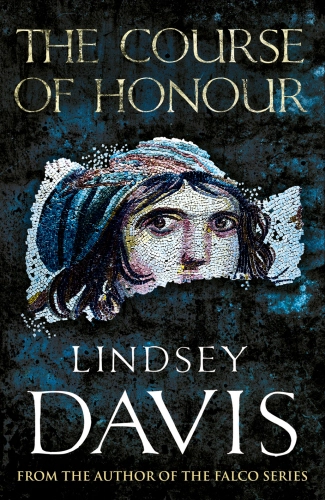
The Course of Honour
A tantalising half-sentence in Suetonius’ biography says that after his wife died, Vespasian ‘took up again with Caenis, his former mistress and one of Antonia’s freedwomen and secretaries, who remained his wife in all but name even when he became Emperor’.
This is the archetypal secretary-to-boardroom plot — a true story, with a decent hero, not to mention a very strong heroine. The political events are viewed from a close vantage point – hers, so without the traditional male, aristocratic bias . A love story in which young lovers come together a second time in their middle age then are nearly parted yet again.
It was The Course of Honour that gave me the idea for Falco. Most obviously, researching Rome — so vibrant and so notoriously dangerous — inspired his working milieu. I had given my all to Antonia Caenis, with whom I closely identified: a single woman in a society geared to families, an intelligent woman working in a hostile male environment, a sceptical woman viewing the idiocies of politics through helping to administer them. Even when The Course of Honour went to the back of the wardrobe, I had found my courage as an author. Without that, The Silver Pigs would never have been written. Without Falco, my story of Caenis would not have seen the light of day …
The book carries no formal dedication, but it is, in Veronica’s words, for all the girls in all the palaces who sleep on flea-ridden pallets on stone ledges in cold cells, and who live by the hope that one day they will rise to a better place. They will know who I mean.
Reader Favourite:
“Oh, Antonia Caenis…Welcome to freedom – And welcome to me!”
chosen by Helene Ilg